
AI Is Driving a Global RAM Shortage: What It Means for PC Users
AI data centres need huge amounts of memory, putting fresh attention on supply and prices. Here is how the market works and what PC buyers should consider before upgrading.
In this guide
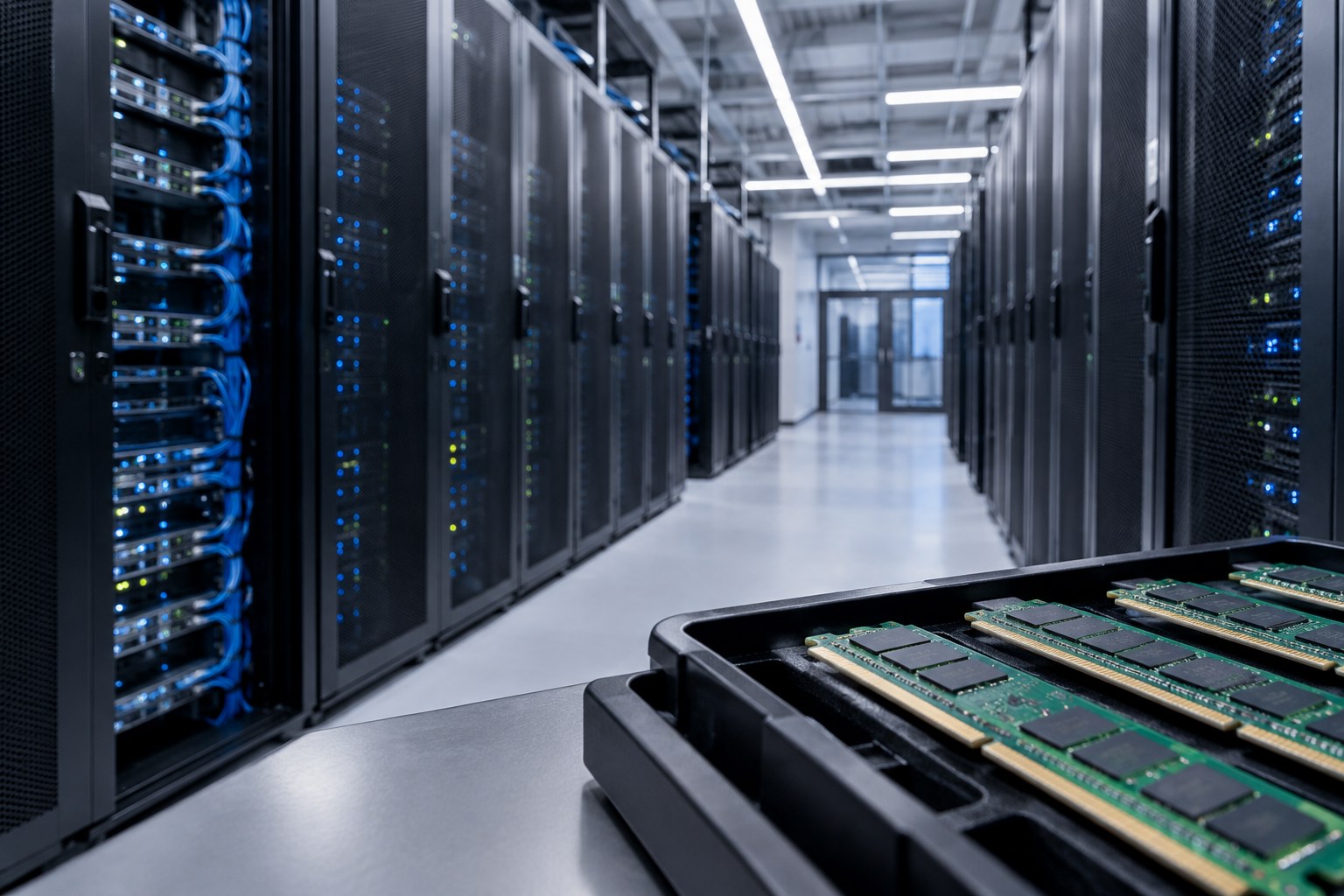
AI data centres use large quantities of high-performance memory, adding demand to an industry that also supplies PCs, servers and consumer devices. If supply struggles to keep pace, some buyers may see higher prices or fewer choices. The effect varies by memory type and product, so check your needs and current prices rather than panic-buying.
Why does AI need so much memory?
AI systems process large amounts of information. During model training and inference, fast memory helps keep model parameters and data available to processors. Large data centres use specialised memory configurations at a scale that is very different from a typical home computer.
As technology companies expand AI infrastructure, they place greater demand on the hardware supply chain. Memory is one important part of that expansion, alongside processors, storage, networking equipment and power systems.
What is DRAM, and is it the same as RAM?
RAM is the general term people use for a computer’s short-term working memory. DRAM, or dynamic random-access memory, is a widely used type of RAM found in desktop PCs, laptops and servers.
Not all memory products are interchangeable. Standard desktop memory and high-bandwidth memory used in some AI accelerators have different designs, performance requirements and supply chains. A shortage in one category does not automatically mean every type of RAM is equally difficult to find.
How can AI data centres affect PC memory prices?
Memory manufacturers make decisions about production capacity, product mix and customer demand. Large orders for specialised memory can influence how manufacturing resources are allocated across the market.
If supply does not keep pace with demand, some buyers may face higher prices, longer lead times or fewer choices. The impact depends on the memory type, supplier, region and product cycle. It is not accurate to assume every RAM kit will rise by the same amount.
Why did the “Ram Altman” discussion go viral?
The topic received extra attention after OpenAI CEO Sam Altman discussed constrained DRAM supply and the use of memory in personal computers compared with cloud data centres on the Cheeky Pint podcast. Some listeners interpreted his comments as favouring data centres over consumer PCs.
In November 2026, Altman briefly changed his X display name to “Ram Altman” after users joked about the subject. He later clarified that he wants people to have plenty of memory in their computers and supports increasing global memory production.
What should PC buyers do?
If you are planning an upgrade, base the decision on your workload and your computer’s compatibility rather than a shortage headline.
- Check your motherboard: Confirm the supported memory generation, capacity and speed.
- Review your workload: Gaming, office work, video editing and local AI tasks can have different memory needs.
- Compare complete kits: Check capacity, speed, timings, warranty and total price.
- Buy from a reputable seller: Verify the exact model and return policy.
- Avoid panic-buying: If your current computer meets your needs, monitoring prices may be more sensible than rushing.
Will the RAM shortage continue?
There is no single date that guarantees when memory supply will return to normal. The outlook depends on manufacturing investment, production yields, demand from AI infrastructure, consumer electronics sales and the types of memory being purchased.
New manufacturing capacity takes time to plan and build. Even after investment is announced, it does not immediately create finished chips for every product category.
Could more efficient AI reduce pressure on memory?
More efficient models, quantisation, better memory management and improved system design can reduce the resources needed for some AI workloads. These developments may help, but they do not remove the need for physical memory. The industry will likely need both more efficient computing and greater manufacturing capacity.
Our AI and technology guides explain what changes mean in practical terms for businesses and everyday users.
Explore AI articlesTalk to usFrequently asked questions
Will AI make all computer RAM more expensive?
Not necessarily. Pricing depends on the memory type, supplier, region, inventory and product cycle. Demand pressure can affect categories differently.
Should I buy RAM now before prices rise?
Do not buy solely because of a headline. Check your actual needs, compatibility, current market prices and the seller’s return policy.
Is DRAM the same as high-bandwidth memory?
Both are forms of dynamic memory, but high-bandwidth memory is designed for different performance and packaging requirements from standard desktop memory modules.
Get Your Business Website provides small business websites on simple monthly plans covering design, hosting, maintenance and on-page SEO foundations. Plans start at £39/month (Starter), £79/month (Growth) and £149/month (Pro). These are proposed starting prices, and scope and terms are confirmed in writing before you commit.
Contact: hello@afaqdesign.com or book a 30-minute call.
Further reading: The Verge’s report on Sam Altman’s RAM comments and Business Insider’s coverage of the name change.
Build a website that keeps your business moving
Tell us what you need from your website and online presence.